Best Cash Back Credit Card for Groceries in 2026
Title Tag: Best Cash Back Credit Card for Groceries (2026): Top 6 Picks Ranked
Meta Description: The best cash back credit card for groceries in 2026, ranked. Compare supermarket cash back rates, caps, and annual fees to find the right card for your budget.
Suggested URL Slug: /best-cash-back-credit-card-for-groceries/
Focus Keyword: best cash back credit card for groceries
Category: Rankings
Groceries are one of the few expenses nearly every household has in common — and unlike dining out or travel, it’s not optional spending. That makes it one of the most valuable categories to optimize on a credit card. The right card can turn a $600 monthly grocery bill into $30–$36 back every month, with no extra effort beyond swiping the right card at checkout.
We compared cash back rate, annual spending caps, annual fees, and welcome bonuses across the leading supermarket rewards cards to find the best options for different types of grocery shoppers — from occasional shoppers to large households that spend well above average.
Editorial disclosure: We may earn a commission from card issuer partners when you apply through links on this page. This doesn’t affect our rankings or the objectivity of this comparison. This article is for informational purposes only and is not financial advice — see our full disclaimer at the end.
Quick Comparison: Best Cards for Grocery Cash Back
| Card | Grocery Cash Back Rate | Annual Cap | Annual Fee | Welcome Bonus |
|---|---|---|---|---|
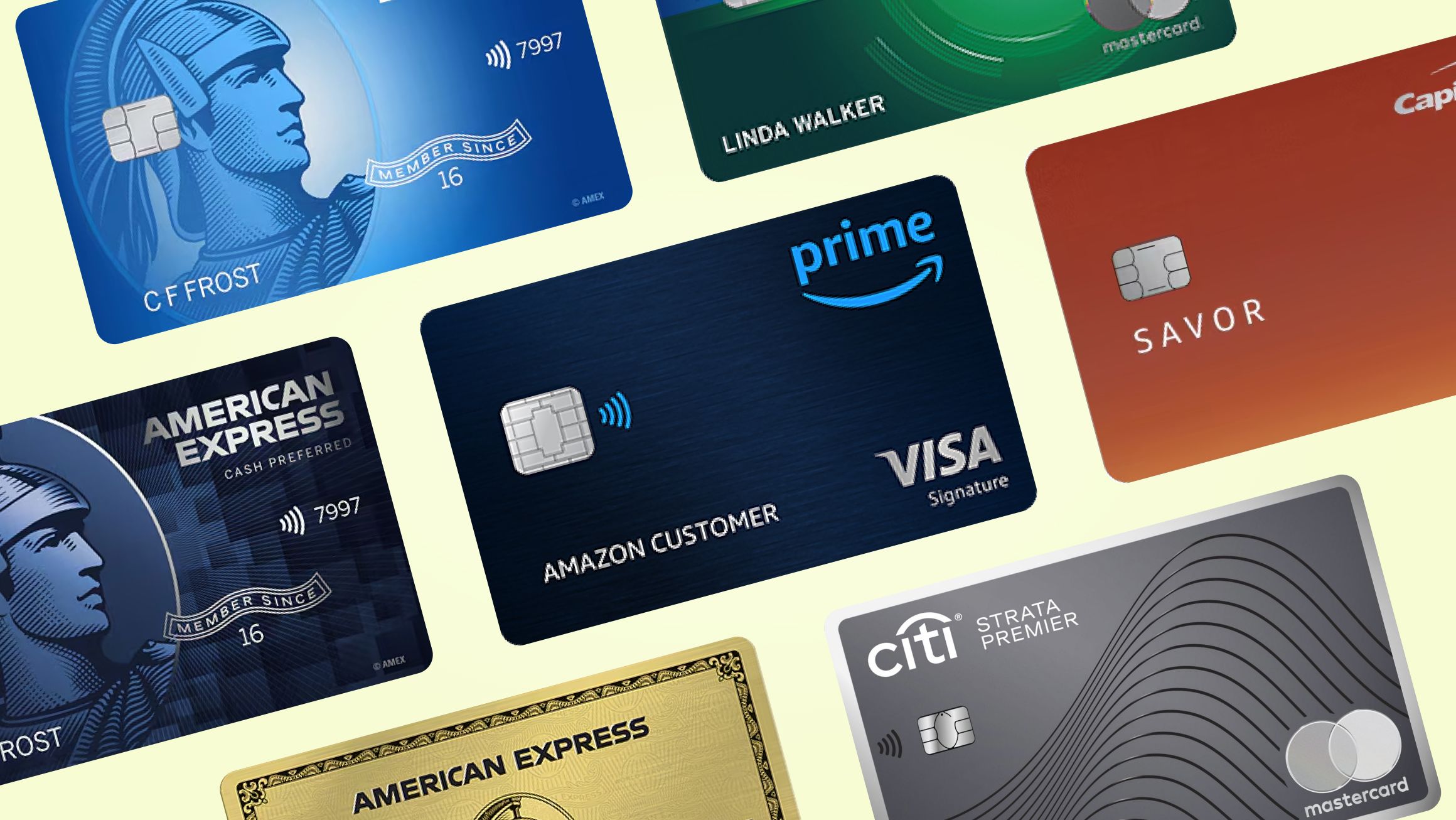
| Amex Blue Cash Preferred | 6% at U.S. supermarkets | $6,000/year (then 1%) | $0 intro, then $95 | $300 after $3,000 in 6 months |
| Amex Blue Cash Everyday | 3% at U.S. supermarkets | $6,000/year (then 1%) | $0 | $200 after $2,000 in 6 months |
| Citi Custom Cash | 5% on top eligible category (can be grocery stores) | $500/month combined (then 1%) | $0 | Varies by offer |
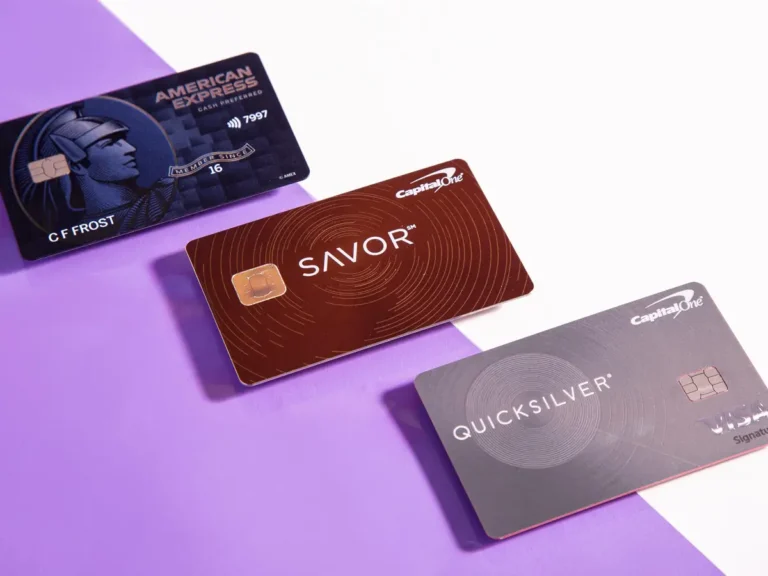
| Capital One SavorOne | 3% at grocery stores (excl. superstores) | No cap | $0 | $250 after $500 in 3 months |
| Bank of America Customized Cash Rewards | 2% automatic at grocery stores & wholesale clubs | $2,500/quarter combined with choice category | $0 | $200 after $1,000 in 90 days |
| Citi Double Cash | 2% flat on everything, including groceries | No cap | $0 | $200 after $1,500 in 6 months |
Rates, fees, and bonus offers are set by the issuers and can change at any time. Always confirm current terms on each issuer’s official website before applying.
1. Amex Blue Cash Preferred — Best Overall for Grocery Spending
If your supermarket bill is the single biggest line item in your budget, this card is hard to beat. It pays 6% cash back at U.S. supermarkets on up to $6,000 in purchases per year (then 1%), which works out to as much as $360 a year — well above the card’s $95 annual fee (waived for the first year) for most grocery-heavy households.
Beyond groceries, it adds 6% cash back on select U.S. streaming subscriptions and 3% at U.S. gas stations and on transit, so it doubles as a strong everyday card, not just a grocery card. New cardholders can currently earn $300 after spending $3,000 in the first six months, and the card includes a 0% intro APR on purchases for 12 months.
Best for: households spending more than roughly $130–$150 a month at U.S. supermarkets, where the elevated 6% rate clearly outearns the annual fee.
Watch out for: the 6% rate excludes wholesale clubs and superstores like Walmart and Target — only purchases coded as U.S. supermarkets qualify.
2. Amex Blue Cash Everyday — Best No-Annual-Fee Option
The little sibling to Blue Cash Preferred trades a lower grocery rate for a $0 annual fee. It earns 3% cash back at U.S. supermarkets, U.S. gas stations, and U.S. online retail, each capped at $6,000 per year (then 1%). That’s up to $180 a year from groceries alone, with no annual fee eating into it.
It also comes with a $200 welcome bonus after $2,000 in spending over six months, plus a modest monthly statement credit toward a Disney Bundle subscription.
Best for: moderate grocery spenders who want a genuine supermarket bonus rate without committing to an annual fee.
Watch out for: the same superstore/wholesale club exclusion as Blue Cash Preferred, and a 2.7% foreign transaction fee.
3. Citi Custom Cash — Best Flexible Category Card
Instead of locking you into one bonus category, Citi Custom Cash automatically applies its 5% cash back rate to whichever eligible category you spend the most in each billing cycle — and grocery stores are one of the eligible categories. You’ll earn 5% on up to $500 in spending in that top category per month (then 1%), with no need to manually enroll or switch categories.
This makes it a strong pick if your top spending category rotates month to month, since you’re not stuck manually managing it. But if groceries aren’t always your single biggest category, you may not get the 5% rate on every grocery trip.
Best for: shoppers whose grocery spending fluctuates and who want automatic category optimization without an annual fee.
Watch out for: the $500 monthly cap on the 5% category is fairly low for large households, and the rate is shared across whichever single category tops your spending that month — not exclusively groceries.
4. Capital One SavorOne — Best Uncapped Grocery Rate
Most high-rate grocery cards come with an annual spending cap. Capital One SavorOne doesn’t: it pays an unlimited 3% cash back at grocery stores (excluding superstores like Walmart and Target), with no ceiling on how much you can earn in the category over the course of a year. It also earns 3% on dining, entertainment, and popular streaming services, plus 5% on hotels and rental cars booked through Capital One Travel.
With no annual fee and a $250 welcome bonus after just $500 in spending in the first three months, it’s an easy card to justify keeping long-term, especially for large households whose grocery spending would blow through other cards’ caps.
Best for: big spenders who would otherwise hit annual or monthly caps on other grocery cards.
Watch out for: like most grocery cards, superstores and wholesale clubs are excluded from the 3% rate.
5. Bank of America Customized Cash Rewards — Best for Existing BofA Customers
This card automatically applies a 2% cash back rate at grocery stores and wholesale clubs, combined with a 3% rate (6% in your first year) in a separate category of your choice — gas, dining, travel, drugstores, online shopping, or home improvement. The catch is that the 2% grocery rate and your chosen 3% category share a combined quarterly cap of $2,500 (then 1%).
The real upside here is for Bank of America Preferred Rewards members, who can boost every cash back rate by 25–75% depending on their relationship tier — turning that 2% grocery rate into as much as 3.5%.
Best for: existing Bank of America banking customers, especially those enrolled in Preferred Rewards, who also shop at wholesale clubs like Costco or Sam’s Club.
Watch out for: the $2,500 quarterly cap is shared between two categories, so heavy spenders in both groceries and their chosen category can hit it quickly.
6. Citi Double Cash — Best Flat-Rate Backup Card
Citi Double Cash doesn’t have a dedicated grocery bonus, but its flat, uncapped 2% cash back on every purchase (1% when you buy, 1% when you pay) makes it a smart backup for any month you’ve exceeded another card’s grocery cap. Since there’s no limit and no category to track, it’s the simplest way to make sure you never drop below 2% on grocery spending, even after other cards’ caps kick in.
Best for: pairing with a capped grocery card — use the specialized card up to its limit, then switch to Double Cash for the rest of the month or year.
Watch out for: on its own, it won’t outearn any of the dedicated grocery cards above within their spending caps.
How to Choose the Right Grocery Card for You
- Spend more than ~$500/month at U.S. supermarkets? Blue Cash Preferred’s 6% rate and $95 fee pencil out favorably.
- Want a grocery bonus with zero annual fee? Blue Cash Everyday’s 3% rate is the more conservative, no-cost choice.
- Shop mostly at Costco, Sam’s Club, or other wholesale clubs? Look at Bank of America Customized Cash Rewards’ 2% wholesale club rate, since many grocery cards exclude these stores entirely.
- Spend heavily and don’t want to think about caps? Capital One SavorOne’s uncapped 3% avoids the spending-limit math altogether.
- Already have a capped grocery card? Add Citi Double Cash as a flat 2% fallback for whenever you exceed that cap.
Frequently Asked Questions
Do these cards count wholesale clubs like Costco as «supermarkets»? Usually not. Most issuers — including American Express and Capital One — define «U.S. supermarkets» or «grocery stores» narrowly and exclude superstores and wholesale clubs like Walmart, Target, Costco, and Sam’s Club. Bank of America’s Customized Cash Rewards card is one of the few that specifically includes wholesale clubs in its bonus category.
Is it worth paying an annual fee for a grocery card? It depends on how much you spend. As a rule of thumb, if the extra cash back you’d earn from a higher rate exceeds the annual fee within the first few months, the fee is worth it. For Blue Cash Preferred’s $95 fee versus its 6% rate, most households spending more than roughly $135/month at supermarkets come out ahead compared to a no-fee 3% card.
Can I combine two grocery cards to maximize rewards? Yes. A common strategy is using a capped high-rate card (like Blue Cash Preferred) up to its annual limit, then switching to an uncapped flat-rate card (like Citi Double Cash) for the rest of the year.
Do grocery delivery or pickup orders count for the bonus rate? This varies by issuer and by which delivery service you use. Orders placed directly with a supermarket’s own delivery or pickup service are typically coded as a grocery purchase, but third-party delivery apps may be coded differently. Check with your card issuer if this is a significant part of your spending.
The Bottom Line
There’s no single «best» grocery card — it depends on how much you spend and whether you’re willing to pay an annual fee for a higher rate. Heavy grocery shoppers with a $95 budget to spare should look hard at Amex Blue Cash Preferred. Everyone else has strong no-annual-fee options in Blue Cash Everyday, Citi Custom Cash, SavorOne, or Bank of America Customized Cash Rewards — and pairing any of them with a flat-rate card like Citi Double Cash ensures you’re never stuck earning less than 2% once a cap is reached.
This article is for general informational purposes only and does not constitute financial or credit advice. Card terms, rates, fees, and welcome bonus offers are determined by the issuers, change frequently, and may vary based on your creditworthiness. Always review the current terms and conditions on each issuer’s official website before applying for any credit card. We are not a bank, lender, or registered financial advisor.