Amex Blue Cash Preferred vs. Blue Cash Everyday: Which American Express Cash Back Card Wins in 2026?
Last updated: July 2026
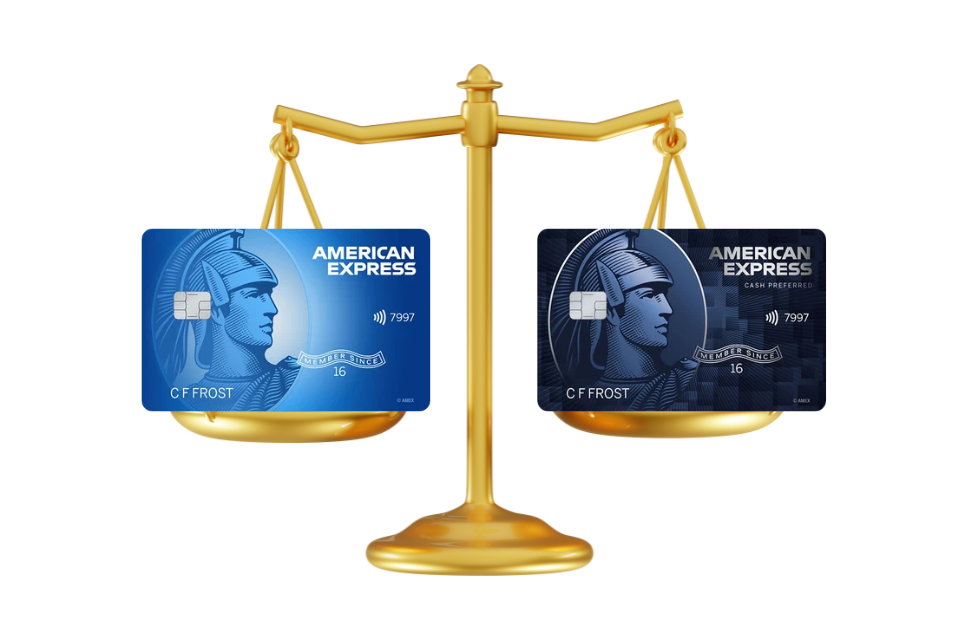
If you’re comparing American Express cash back cards, you’ve probably narrowed it down to these two: the Blue Cash Preferred® Card and the Blue Cash Everyday® Card. Both come from the same family, both reward groceries, gas, and streaming, and both pay out in the form of Reward Dollars you can redeem as a statement credit or at Amazon.com checkout. But the differences in earning rates, annual fee, and spending caps can mean a swing of hundreds of dollars a year depending on your budget.
This guide breaks down exactly how each card earns, what they cost, and which one actually pays for itself based on real spending numbers — not just marketing headlines.
Editorial note: We are not financial advisors. This article is for general informational purposes only and does not constitute financial advice. Card terms, rates, and offers change frequently and are set by the issuer — always confirm current rates, fees, and terms directly on American Express’s official site before applying. This post may contain affiliate links; if you apply through one, we may earn a commission at no extra cost to you. That relationship never influences our analysis.
Quick Comparison Table
| Blue Cash Preferred® | Blue Cash Everyday® | |
|---|---|---|
| Annual fee | $0 intro for year one, then $95 | $0, always |
| U.S. supermarkets | 6% (up to $6,000/year, then 1%) | 3% (up to $6,000/year, then 1%) |
| U.S. gas stations | 3% (uncapped) | 3% (up to $6,000/year, then 1%) |
| Transit (taxis, rideshare, tolls, parking, trains) | 3% | Not a bonus category |
| Select U.S. streaming subscriptions | 6% | Not a bonus category |
| U.S. online retail purchases | 1% (base rate) | 3% (up to $6,000/year, then 1%) |
| All other purchases | 1% | 1% |
| Welcome offer | Up to $300 cash back after $3,000 spent in 6 months | Up to $200 cash back after $2,000 spent in 6 months |
| Intro APR on purchases | 0% for 12 months | 0% for 15 months |
| Foreign transaction fee | 2.7% | 2.7% |
Welcome offers vary by applicant and are not guaranteed; you’ll see your personalized offer after applying, with no impact to your credit score unless you’re approved and accept.
Blue Cash Preferred: Built for Grocery-Heavy Households
The Preferred card’s headline feature is its 6% cash back rate at U.S. supermarkets, capped at $6,000 in eligible purchases per year (about $500 a month), after which the rate drops to 1%. A household that consistently hits that cap earns $360 a year from groceries alone — before counting gas, transit, or streaming.
It also earns 6% on a range of popular U.S. streaming services and 3% at gas stations, a rate that also applies to transit expenses like tolls, parking, trains, and rideshare. Every other purchase earns the standard 1%.
The tradeoff is the annual fee: $0 for the first year, then $95 going forward. For a family spending near the grocery cap, the rewards from that category alone cover the fee more than three times over, which is why this card tends to make sense for anyone with a real grocery bill and a couple of streaming subscriptions.
Blue Cash Everyday: No Fee, Broader Categories
The Everyday card trades the 6% grocery rate for a flatter, no-fee structure: 3% cash back at U.S. supermarkets, 3% at U.S. gas stations, and 3% on U.S. online retail purchases — each capped at $6,000 per year in combined category spending, then 1%.
Because there’s no annual fee, there’s no break-even math required. Every dollar of cash back is pure upside, which makes this the safer pick for lighter spenders, students, or anyone who isn’t sure they’ll spend enough to justify a paid card.
The gap between the two cards narrows quickly once you add online shopping into the picture, since Everyday rewards it at 3% while Preferred only pays the base 1% rate there.
Where the Break-Even Point Actually Sits
The Preferred card’s $95 fee is only worth paying if your spending pattern favors its stronger categories. As a rough guide:
- If most of your spending is groceries and streaming, Preferred usually wins once your grocery spend passes roughly $150–200 per month, since the extra 3 percentage points on groceries (6% vs. 3%) adds up faster than the fee.
- If your spending leans toward online shopping, transit isn’t a factor, or you spend under $150 a month on groceries, Everyday’s no-fee structure is likely to net you more, since you keep the 3% online rate that Preferred doesn’t offer.
- If you’re not sure your habits are stable year to year, the no-fee card removes the risk entirely.
Welcome Offers and Introductory APR
Both cards currently offer «as high as» welcome bonuses that vary by applicant: Preferred can offer up to $300 back after $3,000 in spending within six months, while Everyday can offer up to $200 back after $2,000 in the same window. Neither offer is guaranteed — you’ll only see your personal offer after applying, and it won’t affect your credit score unless you’re approved and choose to accept.
On financing, Everyday actually has the longer runway: 0% intro APR on purchases and balance transfers for 15 months, versus 12 months on Preferred. If you’re planning a large purchase you want to pay off over time, that’s a meaningful difference, though carrying a balance long-term will generally cost more than any cash back rate can offset.
Which Card Should You Choose?
Pick Blue Cash Preferred if:
- You regularly spend more than roughly $150–200 a month at U.S. supermarkets
- You pay for streaming services and want them to earn a bonus rate
- You use transit, rideshare, or tolls regularly
Pick Blue Cash Everyday if:
- You want to avoid an annual fee entirely
- Online retail is a bigger category for you than groceries
- Your spending fluctuates and you don’t want to track a break-even point
Both cards can also be combined with a flat-rate card like Citi Double Cash for purchases outside their bonus categories, so you’re never stuck earning only 1%.
Frequently Asked Questions
Can I have both the Blue Cash Preferred and Blue Cash Everyday at the same time? Yes, American Express allows cardholders to hold both cards, though your approval will depend on your credit profile and existing relationship with Amex.
Does the 6% grocery rate on Blue Cash Preferred apply to Walmart or Target? Generally, superstores and warehouse clubs like Walmart, Target, and Costco are not classified as supermarkets by Amex’s merchant codes, so they usually earn the base 1% rate rather than the bonus rate. Confirm current category definitions on Amex’s official terms before assuming a purchase qualifies.
Is the $95 annual fee on Blue Cash Preferred worth it? It depends entirely on your grocery and streaming spend. As a rule of thumb, once your monthly supermarket spend passes roughly $150, the extra cash back typically outweighs the fee compared to the no-fee Everyday card.
Do these cards charge foreign transaction fees? Yes, both currently charge a foreign transaction fee on purchases made outside the U.S., so neither is ideal as a primary travel card.
How is cash back paid out on both cards? Both cards pay rewards as Reward Dollars, which can be redeemed as a statement credit or used directly at Amazon.com checkout.
Rates, fees, and offers mentioned above reflect terms available as of July 2026 and are subject to change by the issuer at any time. Always verify current rates and fees on American Express’s official website before applying. This article does not constitute financial, legal, or tax advice.