Wells Fargo Active Cash vs Citi Double Cash: Which 2% Cash Back Card Wins in 2026?
Title Tag: Wells Fargo Active Cash vs Citi Double Cash (2026): Which 2% Card Wins? Meta Description: Wells Fargo Active Cash vs Citi Double Cash compared for 2026: both pay 2% cash back, but fees, APR, and perks differ. See which flat-rate card fits you. Suggested URL Slug: /wells-fargo-active-cash-vs-citi-double-cash/ Focus Keyword: Wells Fargo Active Cash vs Citi Double Cash Category: Card Comparisons
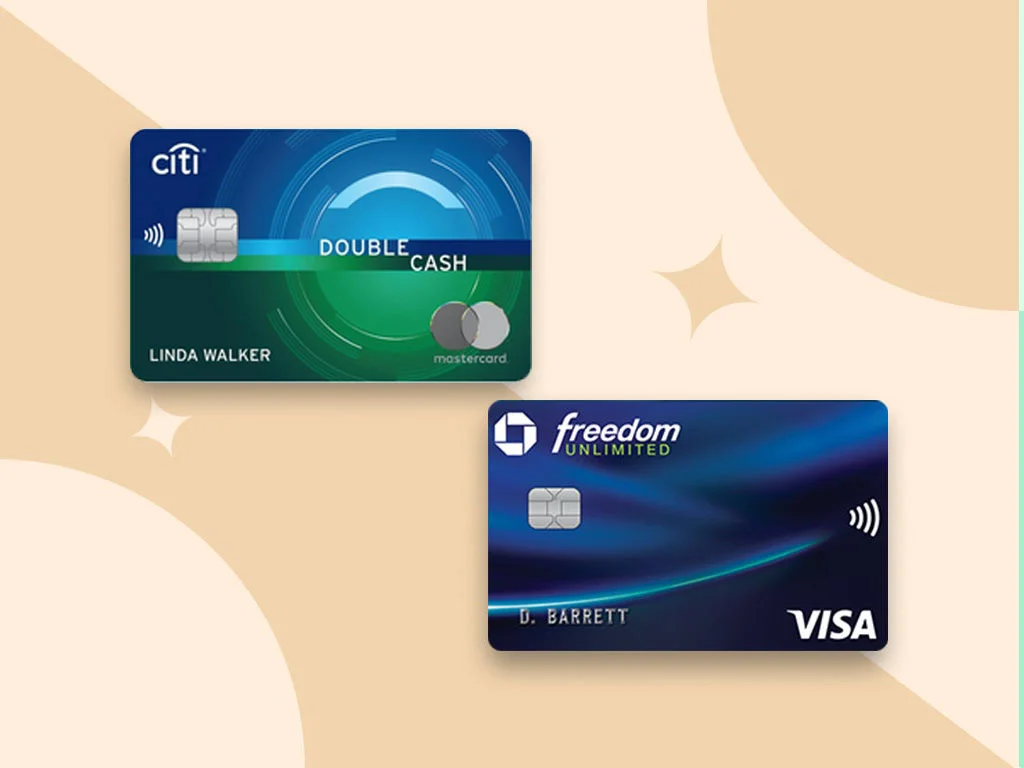
These are the two best-known flat-rate cash back cards in the U.S., and on paper they look nearly identical: both pay roughly 2% on every purchase, both charge $0 annual fee, and both target the same kind of cardholder — someone who wants a «set it and forget it» card with no categories to track.
But once you look past the headline rate, the two cards pull apart in meaningful ways: how fast you can earn a bonus, whether you get an intro APR on new purchases, and what extra perks come along for the ride. Here’s how Wells Fargo Active Cash and Citi Double Cash actually compare.
Editorial disclosure: We may earn a commission from card issuer partners when you apply through links on this page. This doesn’t affect our ratings or the objectivity of this comparison. This article is for informational purposes only and is not financial advice — see our full disclaimer at the end.
Quick Comparison: Wells Fargo Active Cash vs Citi Double Cash
| Feature | Wells Fargo Active Cash® | Citi Double Cash® |
|---|---|---|
| Annual fee | $0 | $0 |
| Base cash back rate | Unlimited 2% on all purchases | 2% (1% when you buy + 1% when you pay) |
| Bonus categories | None | 5% on hotels, car rentals & attractions via Citi Travel |
| Welcome bonus | $200 after $500 spent in 3 months | $200 after $1,500 spent in 6 months |
| Intro APR on purchases | 0% for 12 months | None |
| Intro APR on balance transfers | 0% for 12 months (within 120 days) | 0% for 18 months |
| Ongoing variable APR | 18.49% / 24.49% / 28.49% | 17.49%–27.49% |
| Foreign transaction fee | 3% | 3% |
| Notable perk | Cell phone protection up to $600/claim | Redeem via Amazon, transferable to Citi travel partners |
| Card network | Visa Signature | Mastercard |
| Best for | Fast welcome bonus + intro APR on new purchases | Longest 0% balance transfer window |
Rates, fees, and bonus offers are set by the issuers and can change at any time. Always confirm current terms on the official Wells Fargo and Citi pages before applying.
How the Rewards Actually Compare
Wells Fargo Active Cash: 2% with no strings attached
Active Cash pays a straightforward, unlimited 2% cash rewards rate on every purchase, full stop. There’s no «buy now, pay later to unlock the second 1%» mechanic — you simply earn 2% at the time of purchase. That makes it marginally simpler in practice than Double Cash’s two-step structure, even though both land at the same 2% for anyone who pays their bill.
There are no bonus categories at all — not even for travel. What you see is what you get: 2% everywhere, every time.
Citi Double Cash: 2% plus a travel bonus
Double Cash also nets out to 2% on regular purchases (1% when you buy, 1% when you pay), but it adds a 5% total cash back rate on hotels, car rentals, and attractions booked through the Citi Travel portal. If you already book travel that way, this gives Double Cash a real edge over Active Cash’s flat rate with no exceptions.
The trade-off is the earning mechanic itself: you only get the second 1% once you’ve paid off the purchase. For anyone who pays at least the minimum on time, this is a non-issue — but it’s worth understanding before you rely on the math.
Which pays out more overall?
For pure everyday spending with no travel component, the two cards are effectively tied at 2%. Citi Double Cash pulls ahead only if you regularly book hotels, rental cars, or attractions through Citi Travel specifically. Otherwise, this comparison comes down to bonus speed, APR terms, and perks — not the base rewards rate.
Welcome Bonus: Wells Fargo Wins on Speed
Both cards currently advertise a $200 welcome bonus, but the spending requirements are very different:
- Wells Fargo Active Cash: $200 after spending $500 in the first 3 months — about $167/month.
- Citi Double Cash: $200 after spending $1,500 in the first 6 months — about $250/month, over twice as long a window.
If your priority is unlocking a bonus quickly with modest spending, Wells Fargo Active Cash is the clear winner here. Citi’s bonus is the same dollar amount but takes considerably more spending and more time to earn.
APR and Fees: Where the Two Cards Really Differ
This is the area with the biggest practical differences between the two cards.
- Purchase intro APR: Wells Fargo Active Cash offers 0% APR on new purchases for 12 months — something Citi Double Cash does not offer at all. If you’re planning a large purchase you want to pay off over time without interest, only Active Cash gives you that option.
- Balance transfer intro APR: Citi Double Cash offers a longer runway here — 0% for 18 months, versus Active Cash’s 0% for 12 months (and Active Cash’s offer only applies to transfers completed within 120 days of account opening). If your main goal is moving high-interest debt to a 0% card for as long as possible, Double Cash has the advantage.
- Ongoing APR: Both land in a similar high-teens-to-high-20s variable range depending on creditworthiness, with Active Cash’s range running slightly higher at the top end (up to 28.49% vs. Double Cash’s 27.49%).
- Foreign transactions: Both charge 3%, so neither is ideal for spending abroad.
In short: want 0% on new purchases? Choose Active Cash. Want the longest 0% balance transfer window? Choose Double Cash.
Perks and Redemption
Wells Fargo Active Cash, as a Visa Signature card, comes with a few tangible extras: cell phone protection of up to $600 per claim (two claims per 12 months, $25 deductible) when you pay your monthly phone bill with the card, plus Visa Signature Concierge service and auto rental collision damage waiver. Redemption is flexible — statement credit (minimum $1), direct deposit (minimum $25), credit toward a Wells Fargo loan or mortgage, gift cards, or even cash at an ATM in $20 increments if you also have a Wells Fargo debit card.
Citi Double Cash doesn’t offer cell phone protection, but it does include extended warranty coverage and Citi Entertainment access to presale tickets and special event perks. Redemption includes statement credit, direct deposit, check, gift cards, and Shop with Points at Amazon. Its ThankYou Points can also transfer to Citi’s airline and hotel partners, though the exchange value is limited unless you also hold a premium Citi card.
If cell phone protection matters to you, Active Cash has a real edge. If you want the flexibility (even if limited) to eventually move rewards into travel partner points, Double Cash has a path Active Cash doesn’t.
Which Card Should You Choose?
Choose Wells Fargo Active Cash if:
- You want to earn the $200 welcome bonus quickly with lower spending
- You’re planning a purchase you want to pay off interest-free over the next year
- You want cell phone protection as a built-in perk
- You prefer Visa over Mastercard acceptance networks (a minor factor for most U.S. cardholders)
Choose Citi Double Cash if:
- You regularly book hotels, car rentals, or attractions through Citi Travel and want the 5% rate
- Your main goal is the longest possible 0% window on a balance transfer
- You already hold or plan to get a premium Citi ThankYou card and want a path to travel transfer partners
- You prefer redeeming points through Amazon at checkout
Consider your existing card lineup. If you already have a card offering an intro APR on purchases, Double Cash’s longer balance-transfer window and Citi Travel bonus may matter more. If you’re starting from scratch and want speed plus flexibility, Active Cash is the easier card to get value from immediately.
Frequently Asked Questions
Do both cards really pay 2% cash back? Yes, in practice. Wells Fargo Active Cash pays 2% directly on every purchase. Citi Double Cash pays 1% when you buy and 1% when you pay off that purchase — as long as you make at least the minimum payment on time, you get the full 2%.
Which card has better approval odds? Both typically require good to excellent credit (generally a 670+ FICO score). Neither issuer applies Chase’s «5/24» rule, so opening several other cards recently is less likely to block approval for either of these.
Can I hold both cards at once? Yes, there’s no restriction against holding a Wells Fargo and a Citi card simultaneously. Some cardholders use Active Cash for its intro APR on new purchases while keeping Double Cash open for its Citi Travel bonus and longer balance-transfer window.
Does either card charge an annual fee? No — both are $0 annual fee cards, which is a big part of why they’re so frequently compared against each other.
The Bottom Line
Wells Fargo Active Cash and Citi Double Cash both deliver a genuine 2% cash back rate with no annual fee, so the decision really comes down to timing and terms rather than rewards math. Active Cash wins on a faster welcome bonus and an intro APR on new purchases. Double Cash wins on a longer balance-transfer window and a bonus travel category. Match the card to what you actually need in the next 12–18 months — a fast bonus and breathing room on a big purchase, or a longer runway to pay down existing debt — and either card will serve you well as a long-term, no-fee staple in your wallet.
This article is for general informational purposes only and does not constitute financial or credit advice. Card terms, rates, fees, and welcome bonus offers are determined by the issuers, change frequently, and may vary based on your creditworthiness. Always review the current terms and conditions on Wells Fargo’s and Citi’s official websites before applying for any credit card. We are not a bank, lender, or registered financial advisor.