Citi Double Cash vs Chase Freedom Unlimited: Which Cash Back Card Wins in 2026?
Last update: August 2026
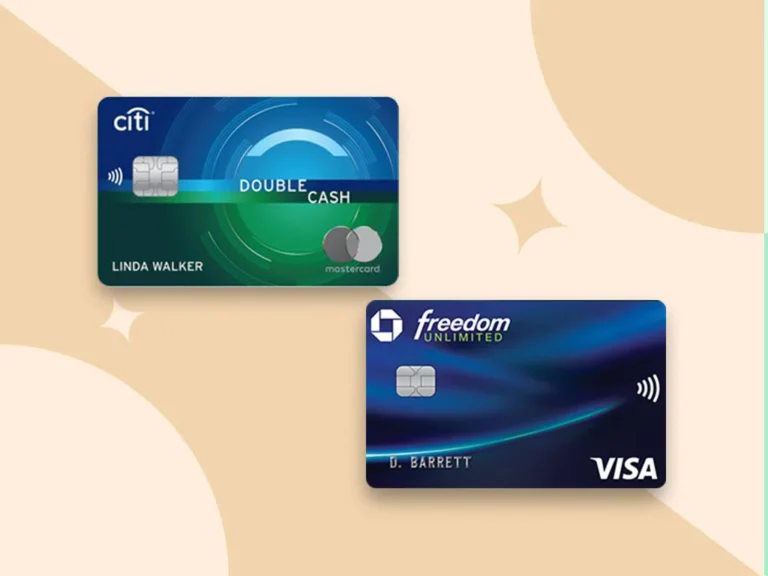
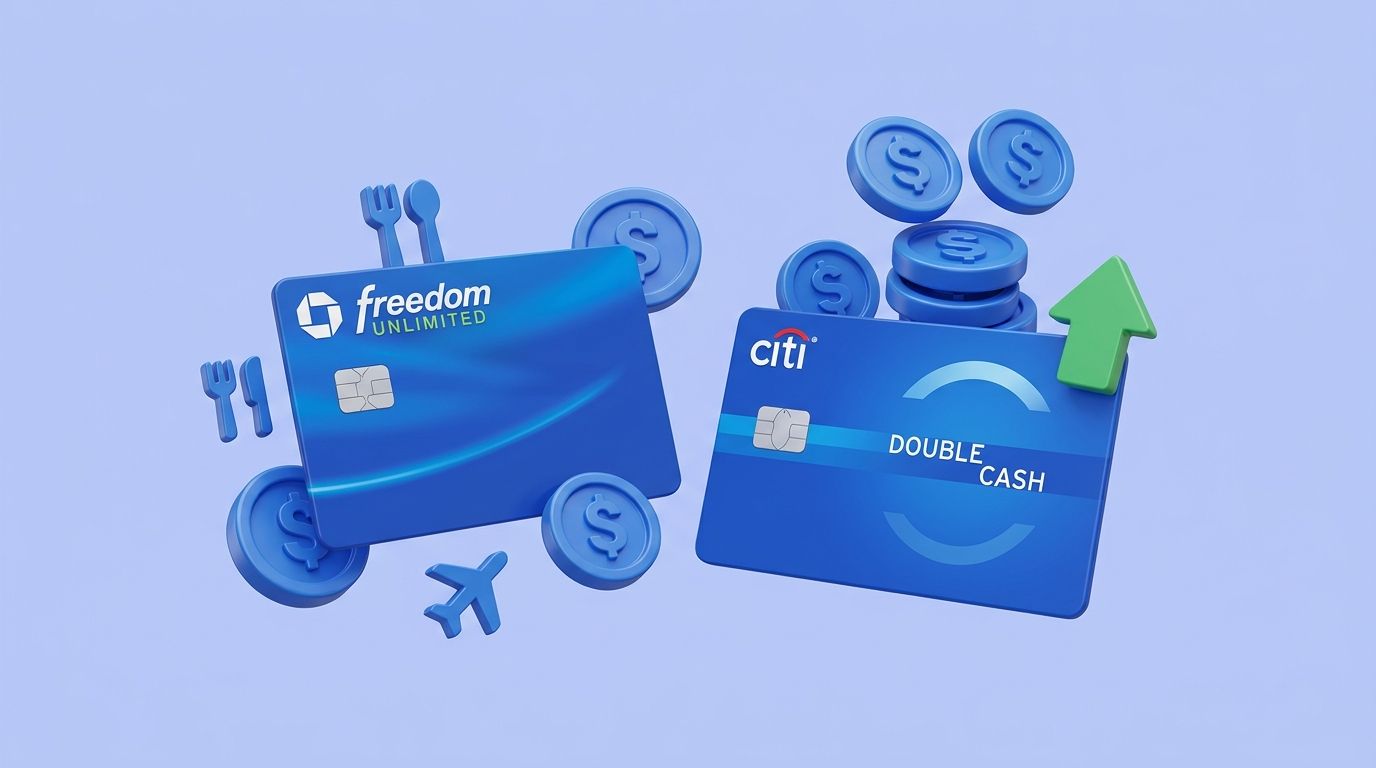
If you’re choosing between two of the most popular no-annual-fee cash back cards in the U.S., you’ve probably narrowed it down to these two. Both are excellent everyday cards, but they reward spending in very different ways: one pays a flat 2% on everything, the other pays more in specific categories and less everywhere else.
Here’s the short version: Citi Double Cash is built for simplicity one flat rate, no categories to think about. Chase Freedom Unlimited is built for category spenders it pays less on average purchases but significantly more on dining, drugstores, and travel booked through Chase. Below, we break down exactly how each card earns, what the welcome bonuses are worth, and which one fits your spending habits best.
Editorial disclosure: We may earn a commission from card issuer partners when you apply through links on this page. This doesn’t affect our ratings or the objectivity of this comparison. This article is for informational purposes only and is not financial advice see our full disclaimer at the end.
Quick Comparison: Citi Double Cash vs Chase Freedom Unlimited
| Feature | Citi Double Cash® | Chase Freedom Unlimited® |
|---|---|---|
| Annual fee | $0 | $0 |
| Base cash back rate | 2% (1% when you buy + 1% when you pay) | 1.5% on all other purchases |
| Bonus categories | 5% on hotels, car rentals & attractions via Citi Travel | 5% on Chase Travel; 3% on dining (incl. takeout/delivery); 3% on drugstores |
| Welcome bonus | $200 after $1,500 spent in 6 months | $200 after $500 spent in 3 months |
| Intro APR on purchases | None | 0% for 15 months |
| Intro APR on balance transfers | 0% for 18 months | 0% for 15 months |
| Ongoing variable APR | 17.49%–27.49% | 18.24%–27.74% |
| Foreign transaction fee | 3% | 3% |
| Redemption | Statement credit, direct deposit, check, gift cards, Amazon | Statement credit, direct deposit, gift cards, transferable to premium Chase cards |
| Best for | Spenders who want one flat rate on everything | Spenders who eat out often or want a fast, low-spend welcome bonus |
Rates, fees, and bonus offers are set by the issuers and can change at any time. Always confirm current terms on the official Citi and Chase pages before applying.
How the Rewards Actually Compare
Citi Double Cash: a true flat 2% on everything
The Double Cash structure is simple but has one quirk worth understanding: you earn 1% cash back the moment you make a purchase, and the second 1% only lands once you actually pay for that purchase. In practice, if you pay your bill (even the minimum, on time), you get the full 2% but if you never pay off a charge, you never see that second half. For anyone who pays down their balance regularly, this is effectively a flat 2% back on every purchase, with no enrollment, no rotating categories, and no spending caps.
On top of that, Citi Double Cash pays 5% total cash back on hotels, car rentals, and attractions booked directly through the Citi Travel portal a nice bonus if you already book travel that way, though it’s a narrower category than it sounds.
Chase Freedom Unlimited: lower baseline, stronger in specific categories
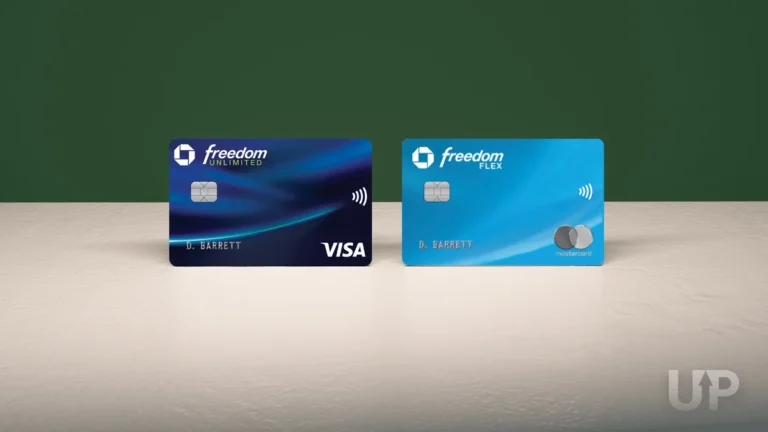
Freedom Unlimited pays a baseline of 1.5% on general purchases lower than Double Cash’s 2%. But it makes up for that with three boosted categories that have no spending cap:
- 5% cash back on travel purchased through Chase Travel
- 3% cash back on dining, including takeout and eligible delivery
- 3% cash back on drugstore purchases
For someone who eats out frequently or orders delivery often, the 3% dining rate alone can outpace Double Cash’s flat 2% on that portion of spending. The trade-off is that every other purchase groceries, utilities, online shopping, gas earns 1.5% instead of 2%.
Which one actually pays out more?
It depends entirely on your spending mix. As a rough guide:
- If dining and drugstore purchases make up a large share of your monthly spending, Freedom Unlimited likely wins.
- If your spending is spread across many categories with no clear pattern (bills, subscriptions, groceries, online shopping, services), Double Cash’s flat 2% usually comes out ahead, since none of it gets stuck at Freedom Unlimited’s lower 1.5% baseline.
- Frequent travelers booking through Chase Travel will find Freedom Unlimited’s 5% rate hard to beat, though Double Cash’s Citi Travel bonus is nearly as strong at effectively 5% too.
Welcome Bonus: Fast and Small vs. Slower and Larger
This is one of the clearest differences between the two cards.
Chase Freedom Unlimited currently offers a $200 bonus after spending just $500 in the first three months about $167 a month, which is an easy bar to clear for most everyday spenders.
Citi Double Cash also offers a $200 bonus, but it requires $1,500 in spending over six months (paid out as 20,000 ThankYou Points, redeemable for $200 cash back). The bonus is the same dollar amount, but Chase’s is faster and easier to unlock with normal spending.
If you’re opening a card mainly to bank a quick welcome bonus, Freedom Unlimited has the edge. If you were going to hit $1,500 in spending anyway over half a year, the two bonuses are effectively equal.
APR, Balance Transfers, and Fees
Neither card charges an annual fee, which keeps this comparison focused purely on rewards and borrowing costs.
- Balance transfers: Citi Double Cash offers 0% APR for 18 months on balance transfers three months longer than Freedom Unlimited’s 15-month intro period. If your main goal is paying down existing debt interest-free, Double Cash has the longer runway.
- New purchases: Freedom Unlimited offers 0% intro APR on new purchases for 15 months. Double Cash does not offer an introductory rate on purchases at all only on balance transfers. If you plan to finance a large purchase interest-free, Freedom Unlimited is the only one of the two that allows it.
- Ongoing APR: Both cards land in a similar variable range (roughly high-teens to high-20s), based on your creditworthiness, once the intro period ends.
- Foreign transactions: Both charge a 3% fee, so neither is a good choice for spending abroad.
Redemption Options
Both cards make redemption straightforward and both allow redemption for cash with no minimum threshold in most cases.
- Citi Double Cash pays out in ThankYou Points, redeemable as statement credit, direct deposit, check, gift cards, or Shop with Points at Amazon. Points can also transfer to Citi’s airline and hotel partners, but only at meaningful value if you also hold a premium Citi card on its own, Double Cash’s transfer value is limited.
- Chase Freedom Unlimited earns Chase Ultimate Rewards points, redeemable 1:1 for cash back. The bigger upside: if you pair Freedom Unlimited with a premium Chase card that unlocks transfer partners (like the Sapphire Preferred or Sapphire Reserve), your Freedom Unlimited earnings can become fully transferable travel points often worth more than a flat cent per point.
If you already own or plan to get a premium Chase travel card, Freedom Unlimited has a real long-term edge here, since it plugs directly into the wider Chase Ultimate Rewards ecosystem.
Which Card Should You Choose?
Choose Citi Double Cash if:
- You want the simplest possible rewards card no categories, no activation, no tracking
- Your spending doesn’t concentrate heavily in dining or drugstores
- You’re planning a balance transfer and want the longest 0% window available
- You value a flat, predictable 2% on every purchase
Choose Chase Freedom Unlimited if:
- You spend a lot on dining, takeout, delivery, or drugstore purchases
- You want to unlock a welcome bonus quickly with lower spending
- You’re financing a near-term purchase and want 0% APR on new purchases, not just transfers
- You already have (or plan to get) a premium Chase card and want your rewards to convert into travel points
Consider both. Since neither card charges an annual fee, some cardholders carry both: using Freedom Unlimited for dining, drugstores, and Chase Travel, and Double Cash for everything else that would otherwise earn just 1.5%. This two-card combo covers nearly every purchase at 2% or higher.
Frequently Asked Questions
Is Citi Double Cash or Chase Freedom Unlimited easier to get approved for? Both typically require good to excellent credit (generally a FICO score of 670 or higher), though approval also depends on your income, existing debt, and overall credit history. Chase also applies its unofficial «5/24» rule, which can make approval harder if you’ve opened five or more personal credit cards from any issuer in the past 24 months. Citi does not apply this rule.
Can I have both cards at the same time? Yes. There’s no restriction preventing you from holding both a Citi and a Chase card simultaneously, and many cash back optimizers do exactly that to cover more spending categories at a higher rate.
Do the cash back rewards expire? No, on both cards your rewards do not expire as long as the account stays open and in good standing.
Which card has the better welcome bonus? Both currently offer $200, but Chase Freedom Unlimited requires less spending ($500 vs. $1,500) in a shorter window (3 months vs. 6 months), making it easier to earn quickly.
The Bottom Line
Citi Double Cash and Chase Freedom Unlimited are both strong, no-annual-fee cash back cards, but they’re built for different habits. Double Cash rewards consistency and simplicity with a flat 2% on everything. Freedom Unlimited rewards specific spending patterns dining, drugstores, and Chase Travel with higher rates, plus a faster welcome bonus and a path into Chase’s broader travel rewards ecosystem. Match the card to how you actually spend, not just to the headline rate, and you’ll get more value out of either one.
This article is for general informational purposes only and does not constitute financial or credit advice. Card terms, rates, fees, and welcome bonus offers are determined by the issuers, change frequently, and may vary based on your creditworthiness. Always review the current terms and conditions on Citi’s and Chase’s official websites before applying for any credit card. We are not a bank, lender, or registered financial advisor.